























How Shipbuilding Innovations Are Reshaping Marine Services in UAE

The UAE's marine industry is moving into a new era of growth, with technology being the driving force. With growing demand for speedier, cleaner, and more secure ships, marine services in UAE are evolving through innovative shipbuilding methods. New technologies, intelligent engines, automation, and digital systems are transforming the way the region constructs and operates its fleets. At the forefront of this revolution is VU Marine, reimagining the future of marine operations with innovation and sustainability.
Emergence of New Hull Shapes and Material Technologies
Today's ships are not just constructed with strength in mind alonethey are engineered for speed, fuel efficiency, and lesser environmental footprint. Computational fluid dynamics is what today's shipbuilding companies in UAE are employing to design streamlined hulls that minimize drag and eliminate up to 20% of fuel consumption. This is particularly important in Gulf waters where heat and long distances test the efficiency of vessels.
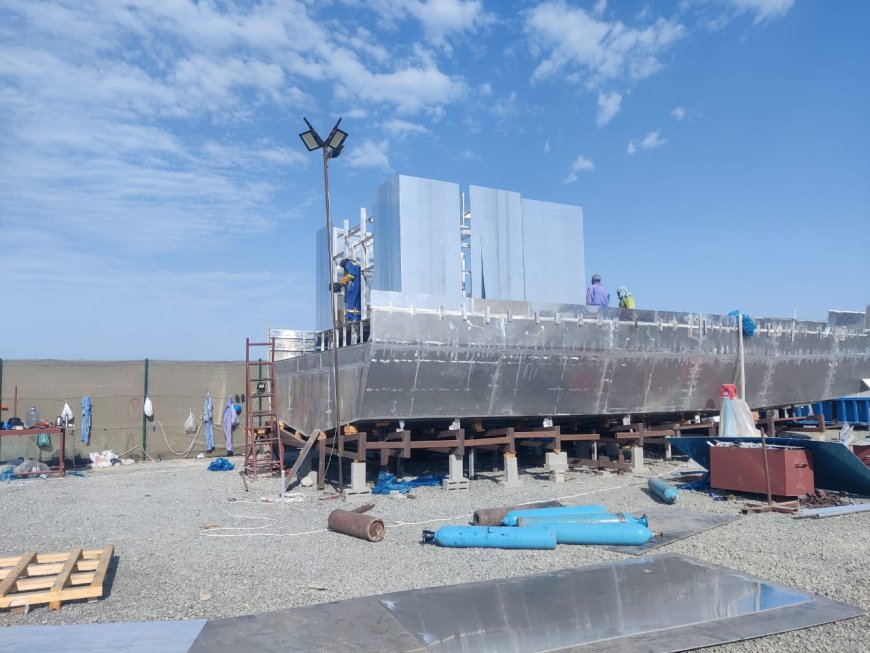
Conventional steel fabrication is also being replaced by modern materials such as fiberglass, carbon fiber, and aluminum alloys. These weigh ships by about a third and have improved corrosion resistance. Such lightweight composites are in the normal build approach at VU Marine, enhancing longevity while decreasing fuel and maintenance costs.
Hybrid Engines and Smarter Power Management
One of the most significant transformations in the world of shipbuilding is hybrid propulsion. Ships are now able to drive on electricity at slow speeds and on diesel when additional power is required. This two-method strategy conserves fuel, lowers emissions, and provides increased maneuvering ability and docking flexibility.
Numerous ship manufacturing companies in UAE are incorporating waste heat recovery systems from engines, which use the recovered heat to power onboard equipment such as water supply and heating. This has the potential to increase overall energy efficiency by 5% to 10%. VU Marine is busy constructing and reconfiguring ships with these capabilities to render maritime operations cost-efficient and environmentally friendly.
Digitally Connected and Predictive by Design
Technology on board ships is evolving rapidly. Instead of relying on manual inspections or reactive maintenance, vessels are now equipped with digital sensors that continuously monitor critical systems. These systems track engine temperature, fuel use, hull stress, and morefeeding data into smart dashboards used by onshore teams for remote diagnostics.
Predictive maintenance is perhaps the greatest advantage of this change. Instead of waiting for a component to fail, VU Marine employs AI-powered analytics that identify potential issues before they turn into expensive problems. This keeps vessels operating longer, minimizes surprise breakdowns, and drastically decreases the cost of repairs.
Computer navigation devices also optimize trips. Sophisticated routing devices consider weather, tides, and port congestion in plotting the most efficient, safest, and quickest route. They reduce fuel consumption and enable ships to arrive on timethe key to customer satisfaction and profitability.
Automation, Safety, and Crew Comfort
Automation is another area of major innovation. Automated mooring systems, ballast control, and even cargo handling technology are being installed on ships. They enhance precision, minimize the role of human error, and accelerate operations at the port. Top shipbuilding companies are now employing robots for hull inspection and cleaning. Rather than having to remove vessels from service for weeks, underwater drones and magnetic cleaners do the job in hours.
Safety has been enhanced as well. Bridge systems now integrate radar, sonar, charts, and autopilot in a single intelligent interface, minimizing crew stress and enhancing situational awareness. VU Marine has implemented these technologies fleetwide to safeguard crew and cargo.
Concurrently, there's also renewed emphasis on living environments at sea. Ships today are designed with improved air filtration, sound dampening, and temperature regulationhealthy spaces for crews. Satisfied, well-rested teams make fewer errors and work more efficiently, which ultimately enhances service provision and lessens risk.
Local Capacity and Environmental Compliance
As innovation continues, so does the UAE's capability of dealing with and servicing its fleets locally. Previously, most of the ship repair and upgrades had to be undertaken overseas. Today, new facilities and more robust local supply chains are enabling UAE firms to construct and service advanced ships without venturing out of the region. VU Marine falls within this national agenda through its in-house upgrades and quick response services supported by local technical expertise.
International emissions regulations are tightening as well. In order to meet International Maritime Organization (IMO) standards, vessels now have to lower sulfur and nitrogen oxide emissions. That involves employing low-sulfur fuels, high-end exhaust systems, or alternative power. VU Marine ensures everything it builds or renovates complies with these requirements so customers don't incur penalties and retain worldwide access.
Planning for the Next Wave: Autonomy and Clean Energy
In the future, future-proof designs are becoming the norm. Ships are being constructed with flexible fuel systems that can be modified for biofuels, ammonia, or hydrogen once new infrastructure is developed. Modular engines and storage tanks enable the ability to easily upgrade. Long-term thinking ship building companies already have vessels being prepped for conversion over the next decade.
Semi-autonomous operation is another emerging space. Remote-controlled ships and AI-based navigation are being piloted globally, even in UAE waters. Although autonomy is still years off, capabilities such as automatic docking, remote engine start-up, and computer-driven course tracking are already implemented. VU Marine is researching such technologies to stay competitive and sustainable.
Conclusion
The future of the maritime industry is being constructed today, and the UAE is at its epicenter. Shipbuilding innovationsranging from lightweight materials and hybrid propulsion systems to digital tracking and automationare not only making ships more efficient. They're revolutionizing how marine services are provided, ranging from maintenance and logistics to crew safety and environmental regulations.
VU Marine is leading the way. By embracing the most current technologies and emphasizing smarter, more environmentally friendly, and safer ships, the company is setting a new benchmark for marine operations in the country. As regulations become more stringent and competition increases, shipbuilders have to keep innovating. In this competition, innovators will leadand VU Marine is already well ahead of them.